Dennis Winter Contact

When adding people stops adding speed.

Advisory for founders, CEOs and CTOs of software companies that are scaling — and noticing that more headcount, more process or more tools no longer fix what slows them down.

Book a 30-minute intro call Online · No obligation
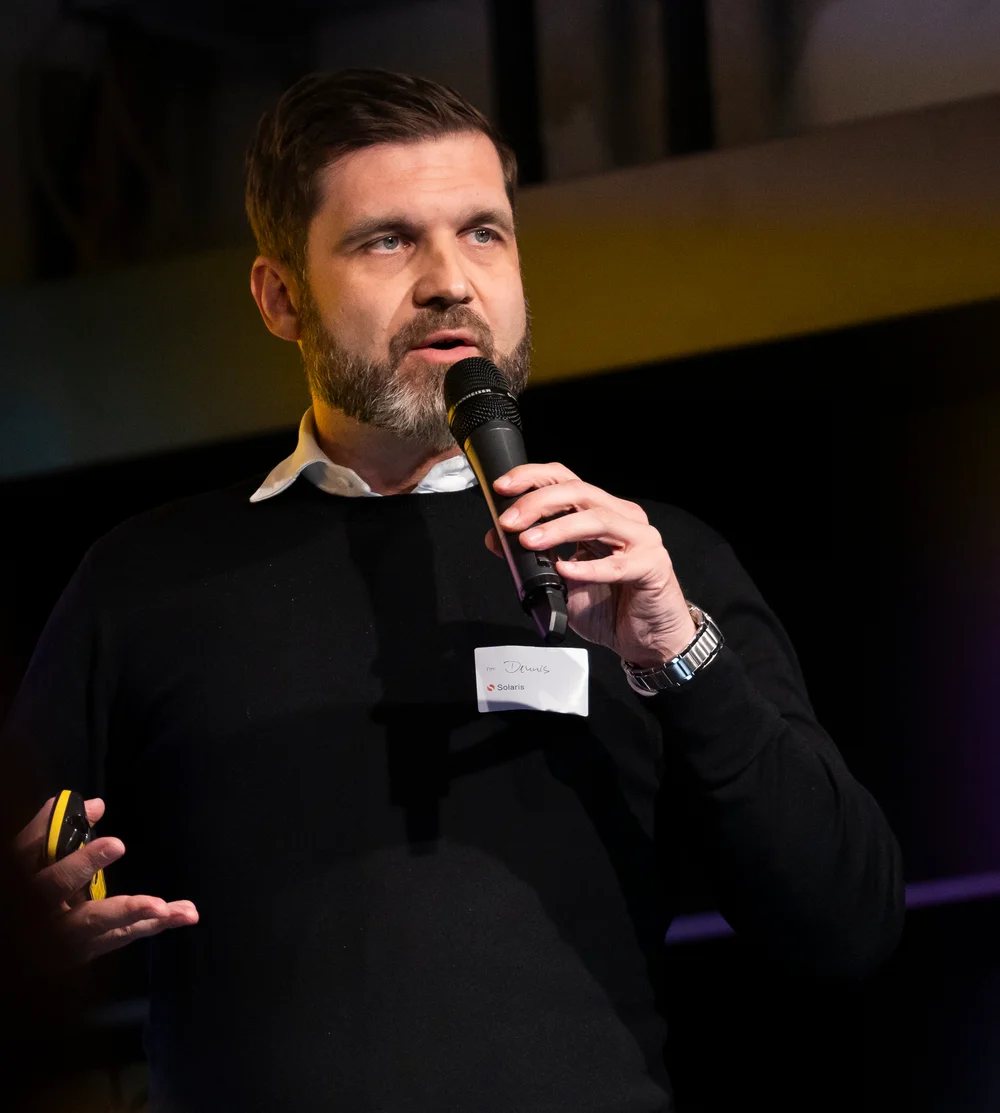
Dennis Winter speaking at an event

Before you hire anyone

Maybe you don't need another hire. Or another consultant.

When a growing company slows down, the reflex is to add: more people, more process, more tools. But what if the problem lies somewhere else?

  • What if your teams are not too small, but waiting for decisions nobody owns?
  • What if the process that worked at ten people has become the bottleneck at fifty?
  • What if the system nobody wants to touch is quietly setting your roadmap?
  • What if your best people spend their days holding together structures that no longer scale?

Sometimes the answer lies in the organization. Sometimes in the technology. It usually pays to find out which one first.

Where I come in

01

The organization

Organizational Architecture

Most growing companies do not have a structural problem — they have missing functions that have gone unnoticed. I identify the roles that should exist but do not, the ownership gaps that slow decisions, and the reporting lines that made sense at twenty people but now create gridlock. The objective is an organization that can move without asking permission.

For founders, CEOs and leadership teams

02

The technology

Technical Architecture

From platform strategy and build-vs-buy decisions down to code and architecture reviews. The real problems rarely reside in the slide deck. They live in the system nobody wants to touch, the integration that grew organically, or the decision that was "temporary" three years ago. Security, compliance and AI included — built into the architecture rather than bolted on, and only where they hold up against your actual customers and workflows.

For CTOs and VPs of Engineering

03

The counterpart

Strategic Sparring

A counterpart who tells you what they genuinely think, not what you might want to hear. For leaders who have enough yes-people around them and want input from someone who has made these decisions themselves — and lived with the consequences. Confidential, on a regular rhythm or whenever a decision is due.

For CEOs, CTOs and founders

Not sure which one you need? That is what the first conversation is for.

Speaking

Talks and workshops on what actually happens when organizations scale — the cultural debt, the processes nobody questions any more, and why the answer is almost never more people or more tools. For leadership teams and conferences that value candour over inspiration. Previously on stage at AWS re:Invent.

What changes

Not a concept on paper. A company that works differently.

  • Decisions are made where the knowledge is, not escalated by default.
  • Ownership is clear — for systems, for processes, for outcomes.
  • Growth no longer requires hiring in proportion.
  • Critical knowledge no longer sits with a few individuals.
  • Your architecture supports the roadmap instead of dictating it.
  • And at some point, you no longer need me.

What I believe

01 / 04

Technology does not fix culture. Culture determines whether technology works.

Most failed digital transformations were not a technology problem. They reflected an organization that was not ready to change — and leadership reluctant to acknowledge it.

02 / 04

Nothing is permanent — including the practices that made you successful.

The process that worked last year may already be your bottleneck. The system you take pride in may be what prevents you from moving faster. Everything should remain open to change — particularly the areas that are rarely questioned.

03 / 04

Growth without additional headcount is possible — once you identify what is blocking it.

Every organization has people who maintain non-scalable systems because those systems reinforce their position. Addressing that openly, without making it personal, is typically the most demanding part of the work.

04 / 04

The most effective advisors have skin in the game. The least effective never did.

Consulting loses its value when it no longer requires accountability. I do not sell hours or deliverables. I work alongside you until the problem is resolved — having sat on the other side of that table myself.

Background

Unlike many consultants, I have lived with the outcomes of my own decisions.

I have spent more than 25 years building and running technology — first as an engineer, later as CTO and managing director. I know first-hand how a process that worked at ten people can quietly become the bottleneck at fifty.

  1. 01

    Technology company

    First employee

    Built the company’s infrastructure from scratch and helped set up its US entity in Sunnyvale, California.

  2. 02

    Fintech start-up

    Platform Engineer → VP Technical Operations

    Joined early to lay the technical foundation of a banking-as-a-service platform. Grew platform engineering from 5 to 50 people.

  3. 03

    Same company, years later

    CTO · Extended Management Board

    Led around 120 people through the start of the war in Ukraine, a shifting venture market and much stricter regulatory oversight. Moved the platform to AWS within a year, cutting infrastructure costs by 25%.

  4. 04

    Financial institution

    Managing Director

    Accountable for the whole business — strategy, technology and regulatory compliance — with around 140 people.

CISSP since 2014. Speaker at AWS re:Invent. Based in Berlin, working in English and German.

How I work

It starts with a 30-minute call — online, no obligation. You do not need to know yet whether you need organizational work, technical work or a sparring partner. Finding that out is what the first conversation is for.

After that, I work embedded rather than as an external expert who appears periodically with observations: regular sessions with the CEO or CTO, and direct involvement wherever it creates meaningful leverage.

Most engagements run six months or longer, and I take on only a small number of clients at any one time. The objective is always to make myself unnecessary.

Get in touch

What has been slowing you down for a while?

Two or three sentences are enough. You will hear back within one business day, usually with a few slots for the intro call.

30 minutes · Online · No obligation

Prefer email? Write to . Or find me on Signal as STPN108.13.